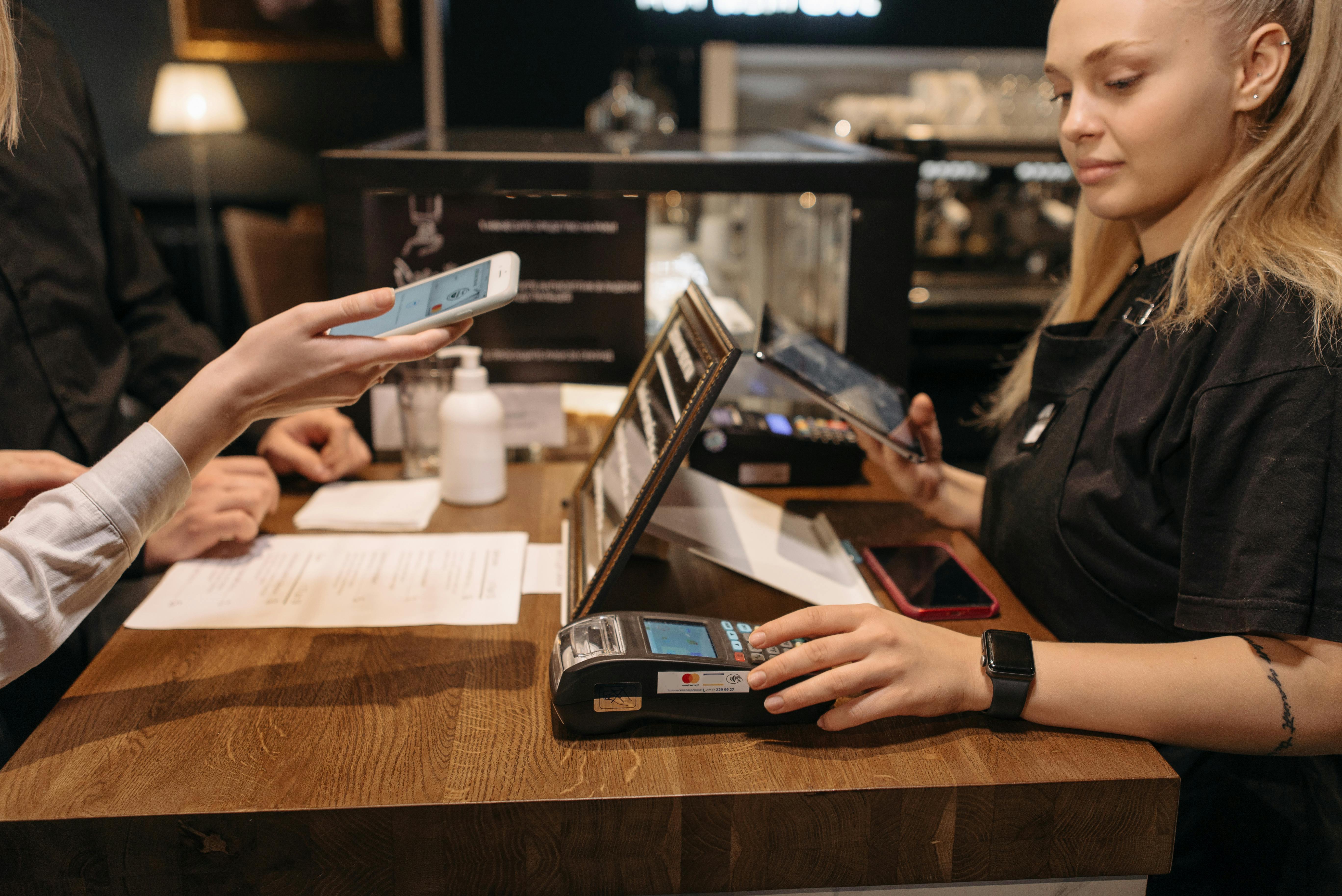
A frictionless checkout experience — customer scans in seconds, no app download needed.
The right loyalty program for small business is one of the highest-return investments you can make — and most small businesses do not have one.
Your regulars are your business. The question is whether you have a reliable system to keep them. Acquiring a new customer costs roughly five times more than retaining an existing one — a figure backed by decades of research from Bain & Company and economist Fred Reichheld, who coined the Net Promoter Score. Yet most small businesses spend almost nothing on retention.
A well-structured loyalty program directly addresses that imbalance. It turns one-time visitors into regulars, regulars into advocates, and advocates into your lowest-cost marketing channel.
The good news: you do not need a large budget or a technical team to make it work. The bad news: most programs — including many digital ones — fail for reasons that are entirely avoidable. This guide covers what those reasons are, how to pick the right program type, and which tools are worth your time in 2026.
Why Loyalty Programs Work (The Psychology Behind Repeat Visits)
Before comparing platforms, it helps to understand why loyalty programs change customer behavior. The mechanics matter more than the technology.
Progress Creates Commitment
Once a customer has earned seven stamps toward a free coffee, those stamps feel like money in their pocket. Abandoning them to visit a competitor feels like a real financial loss. This is the sunk cost effect — and it works powerfully in your favor. Customers with partial progress toward a reward visit more frequently as they approach the finish line, not less.
The Closer They Get, the Faster They Move
Research on what psychologists call the goal gradient effect consistently shows that people accelerate effort as they approach a goal. A customer with two stamps might return in three weeks. A customer with eight stamps will find an excuse to visit this week.
Membership Creates Identity
When you designate someone a "Gold Member" or "VIP," you are giving them a social identity — not just a discount. People who belong to something behave differently than people who are just customers. They defend the business in conversation, refer friends, and forgive occasional mistakes more readily.
Unexpected Rewards Outperform Predictable Ones
A free coffee after ten stamps is appreciated but anticipated. A random free pastry "because you have been coming in every week" creates genuine surprise — and customers remember and repeat that story to others. Surprise rewards generate word-of-mouth that large chains cannot replicate authentically. You can.
Why Most Small Business Loyalty Programs Fail
Understanding what goes wrong is as useful as knowing what works.
Paper Cards Get Lost Before They Are Ever Redeemed
Industry estimates suggest the majority of paper punch cards never result in a redeemed reward. Cards end up in washing machines, forgotten wallets, and desk drawers. You invested in a customer relationship the medium itself undermines.
The deeper problem: paper gives you nothing in return. No customer data. No visit history. No way to reach someone who has drifted away.
Digital Programs With Too Much Friction Kill Adoption
The opposite failure mode is a technically capable program that nobody joins. Asking customers to download a dedicated app is the most common version of this mistake. According to Statista mobile app data, the average smartphone user downloads fewer than one new app per month. Asking someone to install another app to earn a free coffee is a hurdle most people simply will not clear.
Rewards Set Too Far Away Kill Motivation
If the first reward requires 30 visits, customers never start. The sweet spot for a first reward is achievable in three to five visits — close enough to feel real, far enough to require commitment. Many programs fail not because of technology but because the reward math is wrong from the start.
Staff Not Mentioning It Is a Death Sentence
A loyalty program customers never hear about is not a loyalty program. In most cases where enrollment stalls, the problem is not the product — it is that nobody on the floor is asking. A consistent, practiced verbal pitch at checkout is more important than any feature in the software.
What to Look for in a Loyalty Program for Small Business
Not all solutions are built for the same constraints. Here is what actually matters for local and independent businesses.
Zero or Low Friction to Join
The best programs use infrastructure customers already have: their phone's native wallet. Apple Wallet comes on every iPhone. Google Wallet comes on every Android device. Neither requires a download, an account creation, or remembering a password. A customer can join and earn their first stamp in under thirty seconds.
Push Notifications That Reach People
Email newsletters average around 20% open rates. Push notifications sent through Apple and Google Wallet regularly exceed 85–90% open rates, according to OneSignal's push notification benchmark report, because they appear on the lock screen — not buried in a promotions tab. For a slow Tuesday afternoon, that difference is the gap between an empty shop and a booked one.
Actual Customer Data
A good loyalty platform tells you things you cannot know otherwise: who your highest-value customers are, which customers have not visited in 30-plus days, which reward tiers drive the most redemptions, and when your slowest periods predictably occur. This turns loyalty software from a perk into a genuine business tool.
Staff Usability Under Pressure
Test whatever system you choose during your busiest hour with your least tech-comfortable employee. If it adds friction to checkout, adoption will collapse. The right tool should be faster than a paper punch.
Honest Cost Structure
Most platforms charge $20–$150/month. That cost is only meaningful relative to what you get back. A program that retains even one customer per month who would have spent $50/month generates $600 annually — enough to justify the investment many times over.
Loyalty Program Types — Which Structure Fits Your Business?
There is no universally correct answer. The right structure depends on your average transaction size, visit frequency, and customer relationship length.
Digital Stamp Cards — Best for Frequent, Consistent Purchases
The digital version of buy-ten-get-one-free. Works best when purchases are similar in size and customers visit frequently.
Best for: Coffee shops, juice bars, bakeries, car washes, sandwich shops.
Example: Buy 9 coffees, get your 10th free. Any drink purchase earns a stamp.
Watch out for: Reward rates above 15% — run the math carefully before launching. At $5 per coffee, a 10% reward rate costs fifty cents per drink. Sustainable. At 25%, it is not.
Points Programs — Best for Variable Transaction Sizes
A $12 lunch and a $70 dinner should not earn the same reward. Points scale with spending.
Best for: Restaurants, full-service bars, spas, salons, specialty retail.
Example structure:
- 1 point per dollar spent
- 50 points → Free appetizer or dessert
- 100 points → $15 off your bill
- 200 points → Free entree up to $25
Why it works: The first tier is reachable in 2–3 visits, building early momentum. Higher tiers give loyal customers something to aim for long-term.
VIP Tier Programs — Best for Long-Term Relationships
When customers return for months or years, tiers recognize and reward that history publicly.
Best for: Hair salons, spas, boutiques, specialty services.
Example structure:
- Bronze (all members): 5% off services
- Silver (after $500 spent): 10% off + priority booking + quarterly free add-on
- Gold (after $1,500 spent): 15% off + monthly free add-on + birthday treatment + early access to new services
Why it works: Status is hard to give up. A customer who has reached Silver is not comparing prices with the salon next door — they are protecting their tier.
Cashback Programs — Best for Price-Sensitive Markets
Simple and transparent: spend $100, get $5 back toward your next purchase.
Best for: Grocery stores, convenience retailers, competitive markets where customers actively compare prices.
Why it works: No points to calculate, no stamps to track. The value proposition is instantly legible — which matters when customers are already price-conscious.
Loyalty Program Options Compared — An Honest Look
The table below compares the main approaches available to small businesses. Every solution involves trade-offs — the goal is matching the right tool to your specific situation.
| Platform | No App Needed | Apple/Google Wallet | Push Notifications | Analytics | Setup Time | Starting Price | Best For |
|---|---|---|---|---|---|---|---|
| LoyaltyPass | ✅ Yes | ✅ Yes | ✅ Yes (~85–90% open rate) | ✅ Yes | ~10 min | $24/mo | Businesses wanting wallet-native passes with minimal setup and no POS lock-in |
| Square Loyalty | ✅ Yes | ⚠️ Limited | ⚠️ SMS only | ⚠️ Basic | ~20 min | $45/mo | Businesses already on Square POS who want native integration |
| Loopy Loyalty | ✅ Yes | ✅ Yes | ✅ Yes | ✅ Yes | ~30 min | $49/mo | Businesses wanting a more established wallet-pass platform |
| Stamp Me | ✅ Yes | ⚠️ App-based | ✅ Yes | ✅ Yes | ~15 min | Free–$30/mo | Budget-conscious businesses willing to accept lower adoption rates |
| Paper Cards | ✅ Yes | ❌ No | ❌ No | ❌ None | Minutes | $0.10–$0.50/card | Very low-volume businesses testing the concept before investing |
| Custom App | ❌ Download req. | ❌ No | ✅ Yes | ✅ Yes | Weeks–months | $500+/mo | Multi-location brands with development resources and budget |
Key considerations:
- Paper is cheapest upfront but provides zero data and suffers from high card loss rates. A starting point, not a permanent solution.
- Square Loyalty is a strong choice if you are already a Square user. The POS integration is genuinely valuable — but if you are on Toast, Clover, or Lightspeed, you will need a standalone platform instead.
- Wallet-native platforms (LoyaltyPass, Loopy Loyalty) offer the best customer adoption because cards live in the native phone wallet with no download required.
- App-based platforms generally see lower adoption but suit businesses with highly engaged, tech-comfortable customer bases willing to install a dedicated app.
Industry Deep Dives — What Works for Your Business Type
Coffee Shops and Cafes
Coffee is the ideal loyalty category. Customers visit daily or multiple times per week, spend a consistent amount, and are creatures of habit. The goal of a loyalty program here is not to create a new behavior — it is to anchor an existing one to your specific shop.
What works:
- Digital stamp card (9 stamps → 10th drink free) living in Apple or Google Wallet
- Give new members 1 free stamp at signup — creates immediate momentum toward the first reward
- Double stamps during slow windows (typically 2–4 PM on weekdays)
- A birthday drink or pastry — small cost, disproportionate goodwill
- Push notifications on slow mornings: "Double stamps before 11am today"
Common mistake: Restricting the stamp card to one specific drink. Keep it simple — any drink purchase earns a stamp. Complexity at the register costs you time and customer patience.
One cafe owner who switched from paper punch cards to a digital wallet pass saw redemption rates climb from roughly 30% on paper to over 80% digitally. Same reward. Same customers. Different medium.
Restaurants and Bars
For restaurants, the primary loyalty goal is frequency — getting customers who visit once a month to visit twice. The secondary goal is spend per visit, rewarding customers who order appetizers, desserts, and drinks rather than just a main course.
What works:
- Points-based program scaled to dollar spend
- First reward tier reachable in 2–3 visits (builds early habit)
- Push notifications on your slowest days ("Double points Tuesday 5–8pm")
- Surprise rewards for your highest spenders — a complimentary dessert with no announcement is remembered and retold
- Birthday offer — expected, but still effective
Common mistake: Setting the first reward too high. If customers need $200 in spending before earning anything, most will lose interest before they get there.
One restaurant manager using LoyaltyPass push notifications on slow Tuesdays reported going from their lowest-traffic day to fully booked within weeks of consistent double-points campaigns.
Hair Salons and Spas
Salon clients often maintain relationships with a single stylist or practitioner for years. A loyalty program here is less about creating frequency and more about preventing defection, increasing service spend per visit, and generating referrals.
What works:
- VIP tier structure based on cumulative spending
- Points on retail products at a lower rate — encourages product purchases without cannibalizing service revenue
- A bonus for rebooking before leaving — fills your calendar and locks in the next visit
- Win-back push notifications for clients who have not been in for 6+ weeks
- Birthday treatment — especially powerful in a personal service context
Common mistake: Not communicating tier status to clients. The status only creates loyalty if the client knows they have it and feels recognized for it.
One dental practice using LoyaltyPass reported referrals climbing from 2 per month to 15 after launching their program — driven by engaged patients who naturally shared the experience.
Retail Stores and Boutiques
Retail loyalty programs work best when they create urgency and exclusivity alongside standard reward accumulation. The goal is making members feel they are on the inside of something — not just collecting points.
What works:
- Points that convert to concrete store credit ($5 back per $100 spent is clearer than abstract point balances)
- Early access to new arrivals — 24 hours before general availability
- Member-only sale days
- Double points in slow months (typically January and August)
Common mistake: Assuming loyal customers will wait for sales. Early access programs often show the opposite — members buy new arrivals at full price because they want first pick. This protects margins while rewarding loyalty.
Already Running a Loyalty Program? Check These Numbers First
If you have a program in place, the question is not whether to have one — it is whether yours is actually producing results.
Signs your program is working:
- More than 30% of customers are enrolled
- Over half of enrolled members earned or redeemed something in the past 90 days
- Members visit more frequently than non-members
- Members spend more per visit than non-members
Signs something needs fixing:
- Enrollment has stalled or feels like a hard sell
- The majority of members have not engaged in months
- Your team has stopped mentioning it because the process is slow or awkward
- You have no clear data on any of the above
If you are in the second category, the issue is usually one of three things: the system is too slow for staff to use consistently, rewards are set too far away for customers to stay motivated, or the program was launched quietly and never gained critical mass.
How to Launch Your Loyalty Program (Step by Step)
Step 1 — Define Your Primary Goal (5 minutes)
Pick one:
- More visits from existing customers
- Higher spending per visit
- Fewer customers quietly drifting away
- Better data on who your customers actually are
Everything else follows from this choice. A retention-focused program looks different from a spend-focused one.
Step 2 — Design Your Reward Structure (15 minutes)
Set your first reward at a level achievable in 3–5 visits. Calculate your reward cost before launching. A stamp card giving one free item per ten purchases is roughly a 10% reward rate — sustainable for most businesses. At 25%, recalculate.
Step 3 — Choose Your Platform and Test It as a Customer (30 minutes)
Use free trials. Sign up for two or three platforms and run through the entire customer experience yourself — sign up, earn a stamp, redeem a reward. Then test it as an employee during a simulated rush.
The critical question: can your busiest staff member use this without slowing the checkout line?
Step 4 — Train Your Team (One Session)
Your team will make or break enrollment. Practice this pitch until it is natural and takes under thirty seconds:
"Want to join our rewards? You earn a free [reward] after [X] visits. Takes ten seconds — just scan here."
Cover how to answer: "Is it free?" (Yes.) and "Will I get spam?" (Only points updates and occasional offers — and you can remove yourself anytime.)
Step 5 — Launch Loudly
A quiet launch produces quiet results:
- Signs at checkout, on tables, at reception — wherever eyes naturally go
- Social media post with your signup QR code
- Email to any existing customer list you have
- A launch bonus: "Join this week, start with 2 free stamps"
- Staff mentions it to every customer for the first 30 days, no exceptions
Step 6 — Review Monthly, Adjust Quarterly
Track: new enrollments, active earners, active redeemers, visit frequency comparison (members vs non-members), and average spend comparison. If something is not moving, change one variable at a time and measure again.
How to Set Up LoyaltyPass in Under 10 Minutes
For businesses that want a wallet-native digital loyalty program without POS lock-in:
Step 1 — Design Your Card (2 minutes) Select a template at loyaltypass.co, upload your logo, set your brand colors, and choose your reward type — stamps, points, or tiered VIP. No designer required.
Step 2 — Share It Everywhere (1 minute) Print a QR code for your counter. Text a signup link to your regulars. Embed it in your next email. Customers tap once and the card lands in Apple or Google Wallet permanently.
Step 3 — Scan, Earn and Redeem Open the free LoyaltyPass merchant app on your phone. Scan the customer's wallet pass. Points update instantly. No new hardware required.
Step 4 — Engage and Retain Send push notifications for slow-day specials, birthday rewards, and win-back campaigns. Monitor visit frequency, redemption rates, and customer lifetime value from the analytics dashboard.
Pricing starts at $24/month with a 14-day free trial — no credit card required.

Real-time data showing which customers are at risk of churning — and when to reach out.
The Bottom Line
A loyalty program for small businesses is not complicated technology. It is a systematic version of something you already do informally — recognizing the people who keep showing up, and making sure they feel it.
Paper cards were a reasonable starting point a decade ago. In 2026, better options cost less per month than a few cups of coffee and require no technical expertise to launch.
Here is where to start:
- Decide what you want — more visits, higher spend, or fewer customers quietly disappearing
- Pick a program type that fits your business model
- Sign up for two or three free trials and test the full customer experience yourself
- Train your team on the pitch until it is natural
- Launch loudly — signs, social, staff asking everyone — for the first 30 days
- Check your numbers monthly and adjust one variable at a time
The customers who came in today will either return or they will not. A loyalty program shifts those odds, consistently and measurably, in your favor.
Start your free 14-day trial at loyaltypass.co — no credit card required.
Questions about setting up a loyalty program for your specific business? Explore how LoyaltyPass works by industry or browse the full feature set.