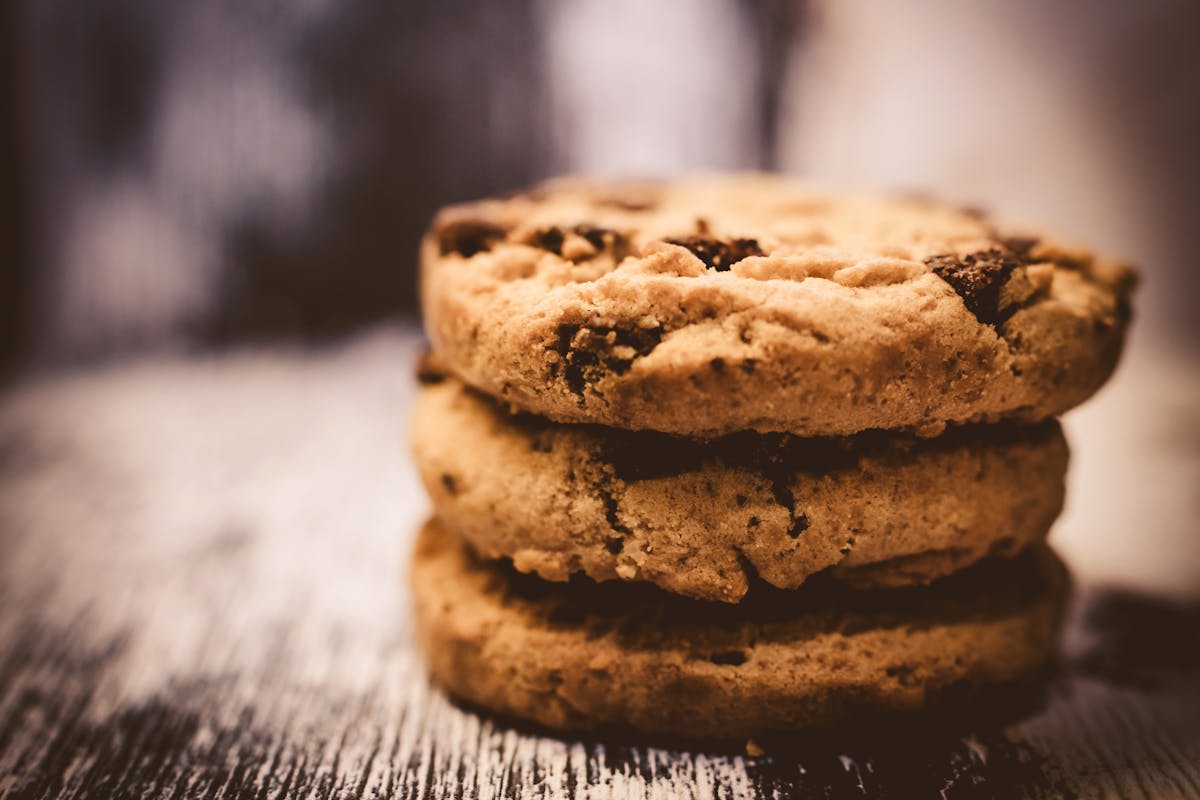
Quick answer: A bakery loyalty program rewards customers for repeat purchases through points, tiers, or membership perks. Crumbl Cookies takes this further by using a weekly rotating menu to create urgency and anticipation that drives visits independent of discounts. Members earn Crumbs on every order, unlock tier benefits at Silver, Gold, and Pink status, and get early access to each week's drop, turning routine cookie buying into a weekly event.
What is a bakery loyalty program?
A bakery loyalty program is a structured system that rewards customers for coming back. It typically involves earning points on purchases, redeeming those points for free products or discounts, and sometimes unlocking tier-based perks for the most frequent buyers. For most bakeries, the program sits alongside the product. For Crumbl, it is woven into it.
This playbook draws on Crumbl's publicly available franchise data, TikTok for Business case studies, and industry research across the bakery and food-service loyalty sectors.
Why Crumbl is worth studying
Crumbl Cookies opened its first store in Logan, Utah in 2017 with no baking experience and one product. By the end of 2024, it had 1,059 locations across the United States, the largest cookie chain in North America, and Bloomberg estimated 2024 sales at $1.2 billion.
The average Crumbl location in 2024 generated close to $1.4 million in annual revenue, up 17% from the previous year. Its TikTok account had 9.6 million followers as of late 2024, and the #crumblreview hashtag has accumulated over 231 million views, none of it paid for by the brand.
None of that happened because Crumbl makes the world's best cookies. It happened because Crumbl understood something most bakeries never figure out: the menu can be the loyalty program.
How Crumbl Rewards actually works
Crumbl Rewards is a free, app-based points program that earns members Crumbs on every order. The more you spend, the higher your tier, and the more Crumbs you earn per dollar.
| Tier | Crumbs per $1 spent | Key perks |
|---|---|---|
| Bronze | Base rate | Birthday free single · Exclusive offers |
| Silver | Higher earn rate | Early access to weekly drop video · Flavor vote on 3rd Wednesday monthly · Free bow + sticker on gifts |
| Gold | Higher earn rate | All Silver perks + exclusive bonus offers |
| Pink | 13 Crumbs per $1 | All Gold perks + Sunday pre-order access (12–6 PM MST) + 5% off during that window |
Source: crumblcookies.com/rewards
How redemption works: Every 100 Crumbs converts to $10 Crumbl Cash. Every 50 Crumbs converts to $5. Crumbl Cash can be spent on cookies, drinks, or delivery fees, anything in the app or in store.
The flavor vote: Silver status and above unlocks the ability to vote for which past flavors appear at their local store for one day, on the third Wednesday of every month. This is not a gimmick. It is a mechanism that makes loyal customers feel ownership over the menu.
Pink tier early access: The highest-tier members get to pre-order each week's new menu from Sunday 12–6 PM MST, before the public announcement hits. That six-hour window, combined with a 5% discount, is the program's most aspirational perk. It converts the weekly drop from something you watch into something you get first.
Crumbl's signature pink box has become one of the most recognisable packages in American food retail. Source: crumblcookies.com
The real loyalty mechanic: the weekly Drop Loop
Every competitor article about Crumbl focuses on the loyalty program in isolation. They list the tiers, describe the Crumbs, and move on. All of them miss the point.
The loyalty program is not what keeps Crumbl customers coming back every week. The rotating menu is.
Here is how it works, and why we call it the Weekly Drop Loop:
Step 1: Anticipation. Every Sunday at 8 PM MT, Crumbl announces the next week's menu on its app and social channels. The announcement is a content event. Fans share it, debate it, and post predictions before the cookies are even baked. Weekly TikTok menu reveals regularly generate millions of views within hours of posting.
Step 2: Urgency. The menu is only available for seven days. There is no "next time." If a customer wants the Galaxy Brownie Cookie or the Strawberry Biscoff, they have until Sunday. That window creates the FOMO that drives visits. As one TikTok creator with 1.4 million followers put it: "the scarcity mindset is huge in making people buy into the experience."
Step 3: Participation. Thousands of creators post weekly reviews unpaid. The #crumblreview hashtag is essentially a free, always-on ad campaign driven entirely by the rotating menu. The program did not create this culture. The menu did. The program rewards the people who are already showing up.
Step 4: Tier aspiration. The higher your tier, the earlier you get in. Pink members pre-order on Sunday before anyone else sees the menu. That privilege has a real monetary value, the 5% discount, but the emotional value is larger. Getting something first, before the crowd, is a status signal. It is the same psychology that makes early boarding feel like a reward.
Step 5: Loop reset. On Monday, the cycle begins again.
The Weekly Drop Loop means that Crumbl never has to manufacture a reason for customers to return. The menu does it automatically, every seven days, without a single promotional email or discount push.
This is what makes Crumbl genuinely different from every other bakery loyalty program. The rewards program sits on top of a retention engine that was already running.
5 tactics independent bakeries can steal from Crumbl
You do not need 1,000 locations, a TikTok team, or a Pantone-certified pink box. Here is how each Crumbl mechanic translates to an independent bakery.
1. Turn your menu into an event, not a list
Crumbl does not have a menu. It has a weekly drop. The distinction matters. A menu is static. A drop is an occasion.
Independent bakeries can create the same anticipation at a fraction of the cost. Choose two or three rotating specials each week, a seasonal flavor, a returning fan favourite, a new experiment. Announce them on Sunday night across your social channels and via push notifications to loyalty members. Give it a name: this week's Specials Drop, the Monday Reveal, whatever fits your brand.
The key is consistency. The announcement must happen at the same time every week without fail. Customers build habits around predictable rituals. Once your audience knows that Sunday evening means new flavors, you own a moment in their week without spending a penny on advertising.
2. Give top-tier members a vote
Crumbl's flavor vote for Silver members and above is one of the cleverest loyalty mechanics in the food industry. It costs nothing to run. It generates genuine excitement. And it makes loyal customers feel like co-owners of the menu.
A small bakery can do this even more personally. Each month, send your top customers a simple poll: which returning item should come back this weekend? Post the result and credit the vote publicly. Customers who voted and won will talk about it. Customers who did not vote will want to next time.
The vote also gives you useful data. The items that consistently win polls are your highest-demand products. That information alone is worth more than most market research.
3. Use early access as a tier reward, not a discount
Most small bakery loyalty programs go straight to discounts. Buy ten, get one free. Ten percent off on Tuesdays. That approach trains customers to expect cheaper prices rather than to value membership itself.
Crumbl's Pink tier pre-order window shows a better way. The primary perk is not a price cut, it is getting in first. Early access to the weekly menu, a 24-hour head start on a limited batch, or a members-only pre-order slot the night before a popular item launches all carry genuine value without cutting your margin.
When customers tell their friends about your loyalty program, "I get early access before it sells out" is a far more compelling story than "I save 10%."
4. Push notifications for new drops, not promotions
Crumbl's app sends a push notification the moment the weekly menu goes live. That notification is not a promotion. It is news. And customers who have opted in want it.
Most bakery loyalty programs use push notifications to push discounts. Customers tune these out fast. They feel like spam. Crumbl's approach is different: the notification delivers something the customer is already waiting for.
We see this pattern consistently with LoyaltyPass customers. Digital wallet passes that send push notifications with news, new products, menu drops, limited availability alerts, achieve open rates around 90%, compared to around 20% for email. The message that lands is the one the customer considers valuable, not promotional.
Train your customers to associate your notifications with something they want to see. Send the weekly specials announcement. Send a "last chance" alert on Sunday afternoon for anything about to leave the menu. Reserve discounts for moments where they earn their place, a slow Tuesday, a loyalty milestone, a birthday, rather than as a default.
5. Name your rewards currency after your brand
Crumbl calls its points Crumbs. That single decision does more for brand recall than most marketing budgets.
When a customer says "I've got 200 Crumbs saved up," they are not thinking about a loyalty program. They are thinking about Crumbl. The language is inseparable from the brand.
Independent bakeries can do the same. A sourdough bakery could call its points Loaves. A French patisserie could use Flakes. A cookie shop could use Chips or Morsels or Bites. The specific word matters less than the fact that it is yours.
Branded reward currency takes one minute to name and lasts for years. Every time a customer checks their balance, they say your brand name in their head.
The Crumbl app combines weekly menu reveals, loyalty tracking, and early-access pre-ordering in a single experience. Source: crumblcookies.com
Where most bakeries get loyalty wrong
The most common mistake is treating loyalty as a discount delivery mechanism.
A stamp card that gives a free item after ten purchases is not a loyalty program. It is a delayed discount. It trains customers to wait for the reward rather than to value the relationship. And the moment a competitor offers an eleventh stamp card, those customers are gone.
Crumbl's program works because the reasons to come back are not financial at their core. The rotating menu creates urgency. The tier structure creates aspiration. The flavor vote creates ownership. The early access creates status. The Crumbs accumulate on top of all of that as a nice extra, but they are not the engine.
The second mistake is inconsistency. The Weekly Drop Loop only works because the drop happens every single week, at the same time, without exception. Customers build their week around it. An inconsistent program, one that runs promotions when the owner remembers and goes quiet the rest of the time, never builds that habit.
The third mistake is making the program complicated. The US bakery industry contributes over $186 billion to the economy and runs on high-frequency, low-consideration purchases. Customers are not willing to study a rulebook before buying a croissant. The best programs have one simple promise: show up, earn something, come back for more.