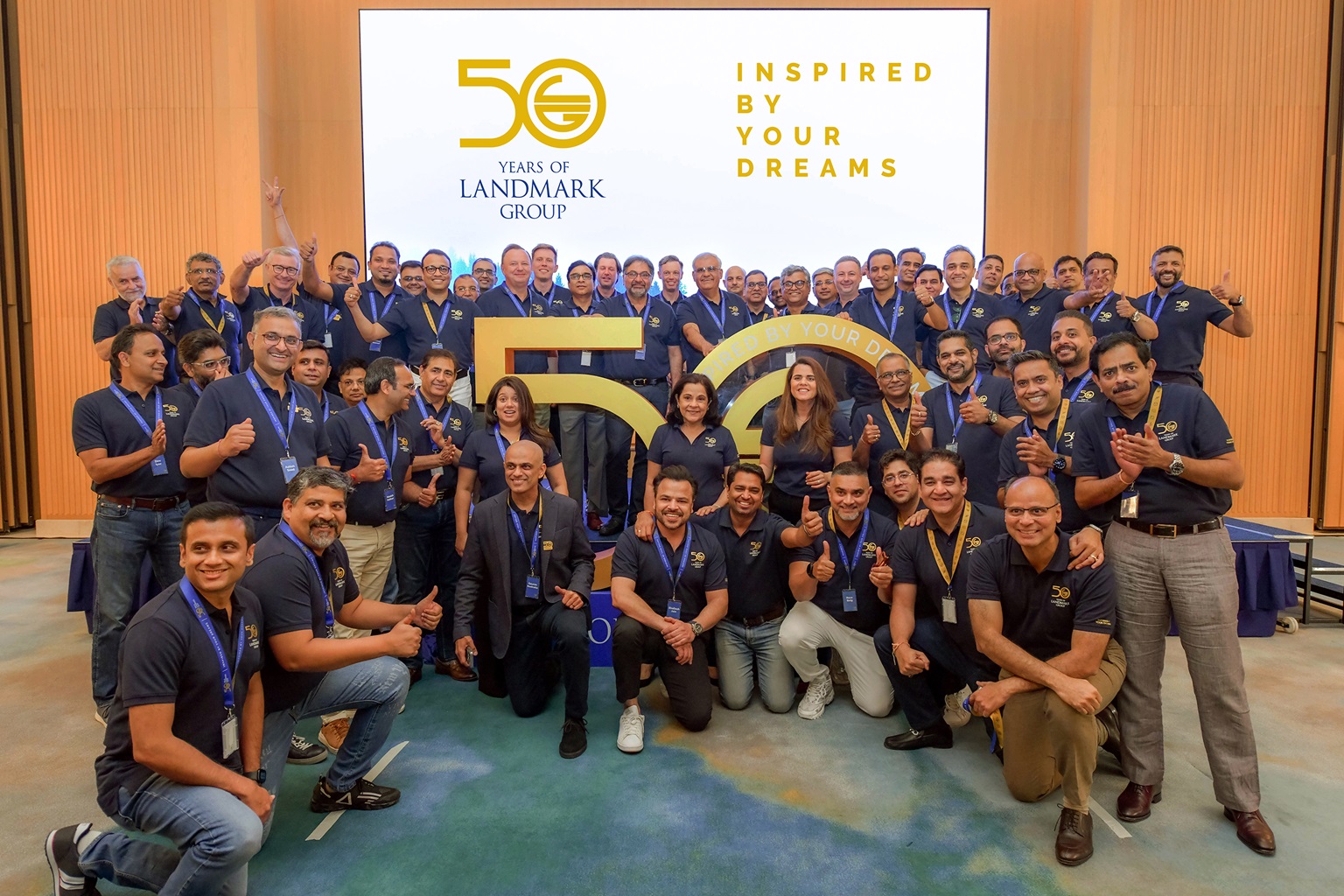
Landmark Group leadership at the Shukran 50th anniversary Rewards campaign, official press image via AETOSWire / Landmark Group. Alt: Landmark Group leadership team celebrating Shukran retail loyalty program UAE 50th anniversary campaign.
Every day, millions of UAE shoppers open an app before they spend a single dirham. Not to compare prices. Not to hunt for deals. They open it to check their Shukran points.
That is what a great retail loyalty program does. It becomes a habit. In the GCC, no program has built that habit better than Shukran Rewards, the loyalty engine behind Landmark Group's 50+ brand empire.
This playbook covers why Shukran works, what keeps 14 million members active, and how smaller businesses in the UAE and GCC can apply the same ideas on a leaner budget.
Why Shukran is the UAE's most powerful retail loyalty machine
The name means "thank you" in Arabic. That was a deliberate choice. Shukran was built to feel like gratitude, not a discount scheme. That framing has made a big difference.
Shukran now has over 14 million active members across the GCC, Jordan, Egypt and beyond. It covers 50+ brands across fashion, home, baby, electronics and dining. It runs in more than 2,200 outlets across 17 countries. By any measure, it is the largest retail loyalty program in the Middle East.
Most loyalty programs lose members slowly. People sign up, earn a few points, then forget the card exists. Shukran has avoided that trap. A few years ago, it moved away from a flat earn-and-burn model. It became tiered and experience-led. That shift deepened engagement instead of weakening it.
The UAE loyalty market was worth around USD 1.57 billion in 2024. It is set to reach USD 2.20 billion by 2028. Shukran is central to that growth. Knowing how it got there is the first step to building something that lasts.
The psychology behind it, why 14 million people keep coming back
Most loyalty programs reward transactions. Shukran rewards identity.
When a customer hits Gold tier, they do not just get more points. They get early sale access, event invites, and status benefits. In the GCC, recognition carries real cultural value. That distinction matters.
Here are the four mechanisms that keep members hooked.
The sunk cost effect. Once a member builds up points, walking away feels like losing money. Each purchase deepens that feeling.
Variable rewards. Shukran gives bonus points during sales, birthday rewards, and partner bonuses. The timing is not fixed. That keeps members checking in. It is the same mechanic that makes social apps hard to put down.
Breadth as a lock-in tool. Shukran works at Centrepoint, Max, Home Centre, Babyshop, Splash, Emax, Lifestyle, and many partners. Members run into it everywhere they shop. There is no effort needed to stay loyal. The program is already there.
The progress principle. Shukran's tier system gives members a clear path to follow. Climb from Silver to Gold to Platinum. Research from Harvard Business Review shows that visible progress is one of the strongest human motivators. Shukran builds that into every purchase.
How the program actually works, tiers, earn, redeem and partners explained simply
Joining Shukran is free. There is no annual fee and no minimum spend. Members join via the Shukran app, online, or in-store at any Landmark Group brand.
Earning points: Members earn points on purchases at Landmark Group brands and select partners. Points apply even during sales, which is rare among GCC retail loyalty programs. The earn rate varies by brand and category.
Redeeming points: Points convert to instant discounts at checkout, online or in-store. The minimum is 20 Shukrans, equal to AED 1. Points stay valid for 24 months from the date earned.
Tier structure: Tiers are based on how often you buy, not how much you spend. Three purchases unlock Silver. Two more reach Gold. Three more after that unlock Platinum. Higher tiers bring more Shukrans per purchase, free delivery, BOGO deals, early sale access, and event invitations from Landmark Group.
Partner network: Members can convert points from American Express Membership Rewards, ADNOC Rewards, and select bank programs into Shukrans. The ADNOC-Shukran partnership, launched in 2025, connects Shukran's 7 million UAE members with ADNOC Rewards' 2.5 million members. Members can now convert points between fuel, retail, food, and leisure. No other program in the region does this at scale.

Shukran Rewards official 50th anniversary campaign branding, official press image via AETOSWire / Landmark Group. Alt: Shukran GCC retail loyalty program UAE official branding standee showing earn and redeem points multi-brand coalition.
5 tactics small businesses can steal from Shukran
You do not need 50 brands or 2,200 stores. You need to know which moves drive results, and find a version that fits your size.
1. Make earning frictionless, always
Shukran gives points even during sales. This removes the main reason customers stop trusting a loyalty program. If your program blocks points during promotions, you teach customers not to rely on it.
Steal it: Never pause your loyalty program during sales. The cost of the extra points is almost always less than the value of keeping a customer active long term.
2. Build your tiers around purchases, not spend
Shukran's tiers are based on visit count, not spend amount. A customer buying a AED 50 item builds tier status just as fast as someone spending AED 500, as long as they return. This drives visit frequency up.
Steal it: Structure your tiers around visits or transactions. A "third visit" unlock feels reachable. A "spend AED 2,000" unlock feels far away for most people.
3. Add soft benefits alongside points
Before Shukran's revamp, it was purely transactional. Same earn rate for everyone, no extras. Customer feedback drove a shift to soft benefits, early sale access, events, birthday rewards, and priority service. These cost little. But they create real emotional loyalty.
Steal it: Add one non-monetary benefit per tier. Early menu access, a birthday offer, a private event invite. These are the perks customers talk about. They also survive a competitor's price cut.
4. Build a micro-coalition with local businesses
Shukran links fashion, home, baby, fuel, and banking under one points wallet. Members cannot easily leave, their points touch too many parts of daily life.
Steal it: Partner with two or three non-competing local businesses to share a loyalty currency. A restaurant, a salon, and a dry cleaner can run a shared points scheme with very little tech. In the UAE and GCC, platforms built for small business loyalty coalitions make this possible without a big budget. This is the multi-brand coalition advantage that makes Shukran sticky. It works at any scale.
5. Go digital from day one, and use your data
Shukran launched its digital card in 2016. That turned the program from a plastic card into a data engine. The app shows what members buy, when they go quiet, and which offers work. That data powers targeted coupons and re-engagement campaigns.
Steal it: Even a simple digital punch card collects useful data. Knowing a customer has not visited in 45 days is more valuable than any broad campaign. Send that person a targeted offer. The GCC's mobile-first retail culture means customers expect digital. And digital means data.
The multi-brand coalition advantage in the Middle East, and how smaller players can build one
The UAE retail market is built around large groups and mega-malls. Majid Al Futtaim has SHARE. Landmark has Shukran. Al Tayer has Amber. These programs are sticky because of coalition breadth, not because of any one brand.
That is both the challenge and the opening for smaller businesses.
A customer at a single boutique has no reason to build loyalty beyond that one store. But a customer earning points at a boutique, a restaurant, and a home goods store nearby is locked into a local ecosystem. The cost of switching becomes emotional, not just financial.
Research from McKinsey shows that personalised loyalty and coalition structures beat single-brand discount programs for repeat purchases.
The good news: building a micro-coalition is now more accessible than ever. You do not need Landmark Group's tech team. You need the right platform, two or three aligned partners, and a shared plan for a good customer experience.
Where most small businesses go wrong
Most UAE small businesses launch a loyalty program and then stop investing in it. The card gets made. The system goes live. Then nothing happens for six months. Here is where it usually breaks down.
Treating loyalty as a discount tool. If the only perk is "spend to save," you have built a discount scheme with extra steps. Discount schemes attract deal hunters, not loyal customers. Shukran works because it makes people feel valued, not because it makes things cheaper.
Setting the redemption bar too high. If members cannot redeem within two or three visits, they write the program off. Keep the threshold low and easy to reach.
Ignoring members who go quiet. Shukran uses data to spot lapsing members and re-engage them fast. Most small businesses have no system for this. One simple rule helps: if a member has not visited in 60 days, send a targeted offer. That one step can recover a lot of lost relationships.
Treating every customer the same. Shukran's biggest internal shift was moving away from one-size-fits-all rewards. Giving your top 10% of customers the same experience as a first-time buyer wastes a real opportunity every time.
Launching without a plan to promote it. A loyalty program no one knows about gets no members. Budget for a launch campaign. In the GCC, WhatsApp Business, Instagram, and in-store signage are the top channels for small retail loyalty sign-ups.
How to launch your own version without a Landmark-sized budget
Shukran's playbook is not a trade secret. It is repeatable, with the right tools and partners.
Here is a lean launch plan for UAE and GCC small businesses.
Step 1: Name your currency. Give your points a name. Shukran called theirs "Shukrans." A named currency feels worth earning. Generic "points" do not have the same pull.
Step 2: Build tiers around visits, not spend. Three visits to Silver, five to Gold. Keep it achievable. Show progress in the app so customers can see how close they are at any time.
Step 3: Add one experiential perk per tier. Not just discounts. Think early access, birthday rewards, or an exclusive item. These are the benefits that get shared and talked about.
Step 4: Find two coalition partners. Look for non-competing businesses that share your customer base. If you run a café, approach a bookshop and a florist. If you run a boutique, approach a spa and a restaurant.
Step 5: Use a platform built for this. LoyaltyPass helps small and mid-size GCC businesses launch earn-and-redeem programs, manage tiers, and build partner coalitions, without enterprise pricing.
The proof is real. When RaftLabs rebuilt a loyalty platform for Energia, an Irish utility serving 280,000+ customers, results came fast. Over 1,100 users logged in within 24 hours. In the first week: 358 rewards redeemed and 3,000+ competition entries. The platform ran at 99.9% uptime. It was built and delivered in 12 weeks. The old system was a slow WordPress setup that could not scale. The new one automated onboarding, redemptions, and campaign tracking from day one. The lesson: the tech barrier to a proper loyalty program is gone. What once took a Landmark-sized team can now be done in weeks.
Step 6: Start with a strong welcome bonus. Give new members enough points to feel the value straight away. Shukran does this through sign-up bonuses and partner conversion offers. Members who feel value in their first session are far more likely to stay active.