is this actually making me money?
Loyalty program ROI answers that question. It tells you, in plain numbers, how much your program earns for every dollar you put into it. In this guide, you'll learn how to calculate it, which metrics to watch, and how to boost your returns, no spreadsheet degree required.

Turning one-time visitors into returning regulars is exactly what loyalty program ROI measures.
What is Loyalty Program ROI (And why most Businesses get it Wrong)
ROI stands for Return on Investment. For a loyalty program, it measures how much extra profit you make compared to what you spend running the program.
Simple enough. But here's where most businesses go wrong.
They look at total revenue from loyalty members and call that their return. The problem? Some of those customers would have bought from you anyway, loyalty program or not. That number is inflated. It does not show your program's real impact.
The right way to measure loyalty program ROI focuses on incremental revenue. That is the extra money customers spend because of your program, beyond what they would have spent without it.
Think of it this way. If a regular customer visited your coffee shop twice a week before joining your loyalty program and three times a week after, that one extra visit per week is your incremental lift. That is what your program actually earned.
Key takeaway: Total member revenue is a vanity metric. Incremental revenue is the number that matters.
The simple Loyalty Program ROI Formula
You do not need a data team to calculate this. Here is a straightforward, three-step method any business owner can follow.
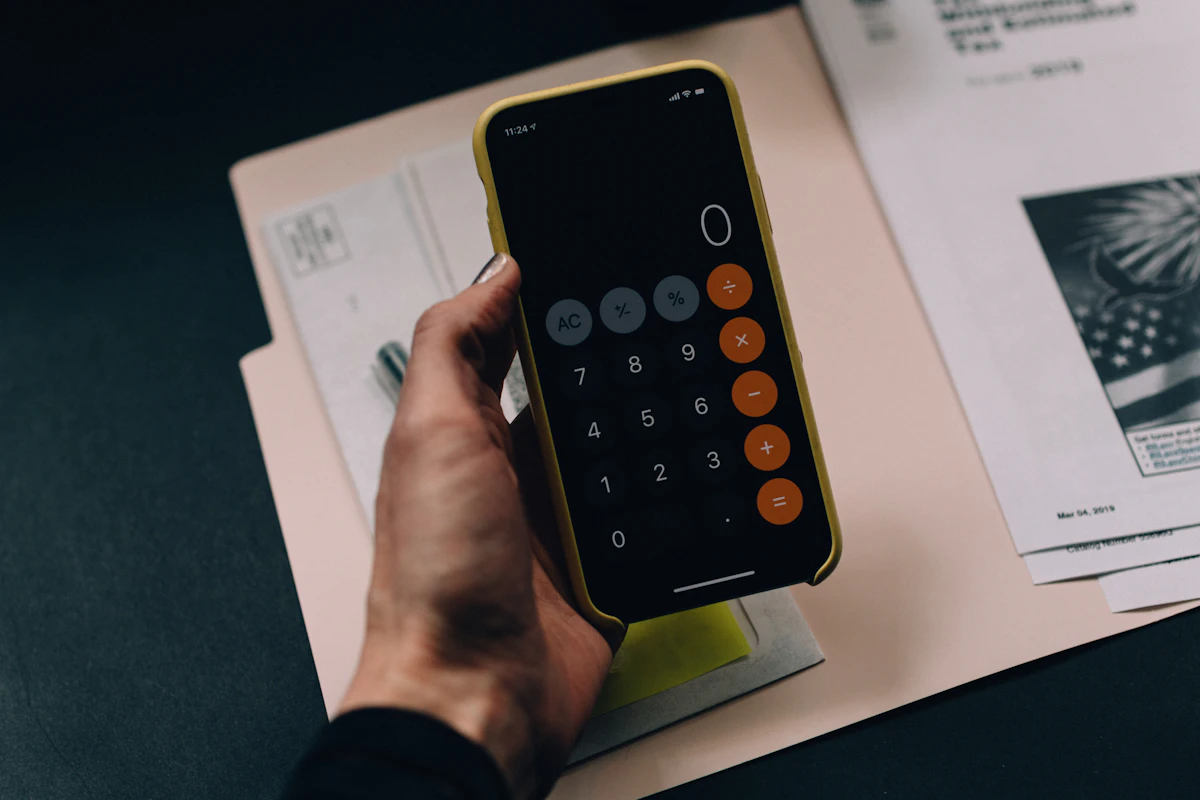
Tracking the right numbers makes your loyalty program ROI calculation clear and actionable.
Step 1, Calculate your Incremental Revenue
First, find the average revenue per customer before they joined your loyalty program. Then find the average revenue per customer after joining. The difference is your incremental revenue per member.
Multiply that by your total number of active loyalty members to get your total incremental revenue.
Formula:
Incremental Revenue = (Avg. Revenue per Member After – Avg. Revenue per Member Before) × Total Active Members
Step 2, add up your Total Program Costs
Be thorough here. Include every cost tied to running your program:
- Platform or software subscription fees
- Reward costs (discounts, free items, points redeemed)
- Marketing spend to promote the program
- Staff time for managing the program
- Any setup or onboarding fees
Formula:
Total Costs = Platform Fee + Reward Costs + Marketing + Staff Time
Step 3, Apply the ROI Formula
Now plug your numbers in:
Formula:
Loyalty Program ROI = (Incremental Revenue – Total Costs) ÷ Total Costs × 100
Worked Example: A Local Coffee Shop:
- 500 active loyalty members
- Average spend before joining: $40/month
- Average spend after joining: $56/month
- Incremental revenue: $16 × 500 = $8,000/month
- Total monthly program costs: $2,500
- ROI = ($8,000 – $2,500) ÷ $2,500 × 100 = 220% ROI
That means for every $1 spent on the loyalty program, the shop earns $2.20 in profit. That is a program worth keeping.
Loyalty Program ROI Metrics you Must track
Your ROI number tells you the bottom line. But these five metrics tell you why it is high or low, and what to fix.
Customer Retention Rate (CRR)
This shows the percentage of customers who keep coming back over a set period.
Formula: (Customers at end of period – New customers) ÷ Customers at start × 100
A rising CRR means your program is doing its job. A flat or falling CRR is a red flag worth investigating immediately.
Customer Lifetime Value (CLV)
CLV is the total revenue you can expect from a single customer over their entire relationship with your business.
The most important comparison here is members vs. non-members. If loyalty members have a significantly higher CLV, your program is generating real long-term value. Nordstrom's Nordy Club members spend four times more annually than non-members, a clear example of CLV impact in retail.
Redemption Rate
Divide total rewards redeemed by total rewards issued. A low redemption rate (under 20%) usually means your rewards are not compelling enough, or customers do not know they exist.
A higher redemption rate sounds costly, but it actually signals healthy engagement. Engaged customers spend more.
Purchase Frequency Lift
How often do loyalty members buy compared to non-members? Even a small increase here drives major revenue over time.
LoyaltyPass customers see an average 47% increase in repeat visits after launching their digital loyalty program. That kind of frequency lift is where real ROI is built.
Push Notification Engagement Rate
This one is unique to digital loyalty programs. If you use wallet-based loyalty passes, push notifications go straight to your customer's lock screen via native OS infrastructure. Industry benchmarks show wallet-based push notifications achieve 20% open rates versus 2% for email (MoEngage), a 10x advantage with zero ad spend.
Track how many customers take action after receiving a push. That open rate translates directly into foot traffic and revenue.
What's a good Loyalty Program ROI? Industry Benchmarks
Wondering if your numbers stack up? Here is what the data shows.
According to the 2025 Global Customer Loyalty Report by Antavo, loyalty programs generate 5.2 times more revenue than they cost on average. That is up from 4.8X the prior year, and the trend is climbing.
In terms of ROI percentage, a benchmark range of 100% to 300% is considered healthy for most small and mid-sized businesses. Anything above 300% means your program is outperforming the market.
Paper vs. digital Loyalty Card ROI
Most businesses underestimate how much the format of their loyalty program affects ROI. Here is an honest comparison:
| Factor | Paper Punch Cards | Digital Wallet Passes |
|---|---|---|
| Card loss rate | ~80% never redeemed | Near zero, always in phone |
| Push notifications | Not possible | 20% open rate vs. 2% for email |
| Redemption rate | Under 8% (industry avg.) | Up to 34% with digital |
| Customer analytics | None | Full real-time dashboard |
| Setup cost | Ongoing print costs | One flat subscription |
| Fraud risk | High (easy to forge) | Zero |
The numbers are not close. A business that switches from paper to digital often sees ROI improvements within the first month, not the first year.
5 Proven Strategies to improve Loyalty Program ROI
If your ROI is lower than expected, these five strategies will move the needle fast.

Digital loyalty programs eliminate friction, one tap is all customers need to join and start earning.
1. Switch from Paper to digital Wallet Passes
Paper punch cards have an average redemption rate under 8%. Eight percent. The rest are lost, forgotten, or sitting in a junk drawer. Digital loyalty cards in Apple Wallet and Google Wallet are always on the customer's phone, always visible, always usable.
LoyaltyPass lets you create digital loyalty cards in under 10 minutes with no app download required for your customers. One quick switch can dramatically improve both redemption rates and repeat visit frequency.
2. Use Push Notifications to drive Repeat Visits
Push notifications are the highest-ROI marketing tool most small businesses are not using. A single targeted push, "Double points today until 3pm", can turn a slow Tuesday into a fully booked afternoon.
Merchants using push notifications through LoyaltyPass report measurable lifts in repeat visits, particularly when campaigns are timed around slow periods or approaching reward milestones. That is new foot traffic with zero ad spend.
3. Segment Customers by Visit Frequency
Not all loyalty members are equal. Your top 20% of customers likely drive 60–70% of your revenue. Treat them differently.
Use your analytics dashboard to group customers by visit frequency or spend level. Then send targeted offers to each group. Win back lapsed customers with a special reward. Reward your VIPs with early access or exclusive perks. Segmentation makes every marketing dollar work harder.
4. Reward Engagement, not just Purchases
Most programs only reward buying. But engagement, referrals, social shares, reviews, birthdays, also drives long-term loyalty. Programs that reward multiple behaviors see higher CLV and stronger word-of-mouth growth.
Adding referral rewards to a loyalty program turns existing members into an acquisition channel. Referred customers arrive with built-in trust, churn at lower rates, and carry higher-than-average lifetime value. A loyalty program that rewards referrals compounds its ROI twice: once through the referring member's increased engagement, and again through the new customer's retention profile.
5. Track and Act on Real-Time Analytics
Data without action is just noise. Use your loyalty platform's analytics to spot patterns, who hasn't visited in 30+ days, which rewards drive the most redemptions, what time of day pushes perform best.
Then act on it. A targeted push to customers who haven't visited in 30 days, timed for a slow afternoon, will consistently outperform any broad promotional campaign. That kind of active management is what separates high-ROI programs from average ones.
How to choose the right Loyalty Platform for better ROI
Your platform choice has a direct impact on your loyalty program ROI. The wrong tool limits what you can measure, and what you can do.

Wallet-based loyalty passes remove app download friction, boosting enrollment and engagement rates.
Look for these features when evaluating a loyalty program platform:
Built-in analytics dashboard. You need visibility into visit frequency, redemption rates, and customer lifetime value without hiring a data analyst. Real-time dashboards make this easy.
Push notification capability. If your platform cannot send direct push notifications to customers' phones, you are leaving your highest-ROI marketing channel unused.
No app required for customers. The biggest barrier to loyalty program adoption is asking customers to download an app. Apple Wallet and Google Wallet passes eliminate that friction entirely. Customers add your card in one tap.
CRM integration. Your loyalty data should connect with your existing tools, Square, Shopify, Toast, Clover, and others. Siloed data means missed opportunities.
Ease of management. According to the 2025 Global Customer Loyalty Report, the most important factor in loyalty technology is ease of management. If your team dreads using it, it will not get used.
See LoyaltyPass pricing and platform features to compare options that fit businesses of every size.
Common Mistakes that Kill your Loyalty Program ROI
Avoid these traps. They are the most common reasons businesses see disappointing returns.
Measuring total member revenue instead of incremental revenue. This inflates your results and hides the program's real performance. Always isolate the lift.
Ignoring redemption rates. A program nobody redeems is a program nobody values. If redemption is below 15%, revisit your reward structure. Are the rewards worth earning? Is the path to earn them clear?
Sticking with paper punch cards. Eighty percent of paper cards are lost before they are ever redeemed. Every lost card is a lost customer. The cost of printing and reprinting cards adds up. Digital is not just better, it is more profitable from day one.
Not using push notifications. If you have a digital loyalty program and you are not sending push notifications, you are ignoring a direct line to your customers. Schedule regular pushes for slow days, special events, and win-back campaigns.
Waiting too long to track results. Start measuring from day one. Set a baseline before launch. Track weekly. Adjust monthly. Programs that are actively managed outperform passive ones by a wide margin.
Start Measuring what Actually Matters
Loyalty program ROI is not complicated. You need three things: the right formula, the right metrics, and a platform that makes it easy to act on the data.
Most businesses are leaving serious money on the table, running paper programs nobody redeems, skipping push notifications, and never measuring incremental revenue. The good news is that fixing these gaps does not require a big budget or a marketing team.
It just requires the right tool.
LoyaltyPass helps local businesses launch digital loyalty cards in under 10 minutes, no app downloads, no developers, no paper. Just a sleek wallet pass that keeps your best customers coming back through the door. See how it works and explore pricing today.