Bunnings did not win Australia's top loyalty program ranking by accident.
In 2025, Honeycomb Strategy surveyed more than 2,000 Australian consumers across 52 of the country's biggest loyalty programs. They measured membership rates, customer engagement, and impact on spending. Bunnings PowerPass came first, ahead of Coles Plus, Wesfarmers' OnePass, Woolworths Delivery Unlimited, and Costco.
What makes that result remarkable is what PowerPass is not. There are no points. No earn rate. No redemption tiers. No birthday voucher. It is a trade account program built around removing friction for tradies and small business owners, and it topped a field of programs with far more traditional loyalty mechanics.
At the same time, Bunnings runs a second, entirely different loyalty play for everyday shoppers: community. The sausage sizzle, the free DIY workshops, and the local sponsorships have made Bunnings Australia's most trusted brand for 2024. That trust is not built with points. It is built with a snag on white bread and a free weekend class on how to tile a bathroom.
This playbook breaks down how both loyalty plays work, why they dominate in different ways, and five tactics any small business can use today.
Quick answer: Bunnings runs two parallel loyalty strategies. PowerPass targets trade professionals with exclusive pricing, digital invoicing, purchase history, and account management tools, built around making every job easier. For everyday shoppers, Bunnings builds loyalty through community: free DIY workshops, weekend sausage sizzles, and local sponsorships that raised over AUD $67 million for community groups in FY25. Together, they make Bunnings the #1 ranked loyalty program in Australia and the dominant player in a market worth AUD $25.52 billion in 2025.
What is the Bunnings loyalty program? Bunnings runs two distinct retention programs. PowerPass is a free trade account for businesses with an ABN. It gives members exclusive pricing, digital invoicing, purchase history, stock checking, and account management tools. For general consumers, Bunnings skips points entirely. Instead, it invests in community events, free DIY workshops, and local sponsorships that turn stores into neighbourhood hubs.
This analysis draws on publicly available Bunnings program data, Wesfarmers financial disclosures, consumer research from Honeycomb Strategy, and our experience helping independent retailers build effective retention programs.
How PowerPass Works
PowerPass is not a consumer loyalty program. It is a professional account tool that happens to produce powerful retention as a side effect.
To join, you need an Australian Business Number (ABN) and must work in a qualifying trade or business category. Builders, electricians, plumbers, landscapers, facilities managers, aged care operators, and owner-builders all qualify. There is no fee. The application takes minutes online.
Once approved, members get access to a suite of tools that make every Bunnings trip faster and easier:
| PowerPass benefit | What it actually does for the member |
|---|---|
| Exclusive pricing | At least 5% off eligible trade products, applied automatically at the register |
| Digital invoices | Every transaction stored in the app, no more fading receipts in the glovebox |
| Purchase history | Full record of what was bought, when, at what price, invaluable for job costing |
| PowerPass app | Barcode scanning, stock checks, aisle locations, product lists, and fast checkout |
| Click & Collect | Order online with PowerPass pricing, collect in-store, no queue required |
| Multiple cards | Issue cards to team members, track spend by job or crew from one account |
| Account credit option | Apply for a credit limit and pay monthly, helps cash flow on large projects |
| Trade Events | Invitations to exclusive events, product previews, and trade-specific deals |
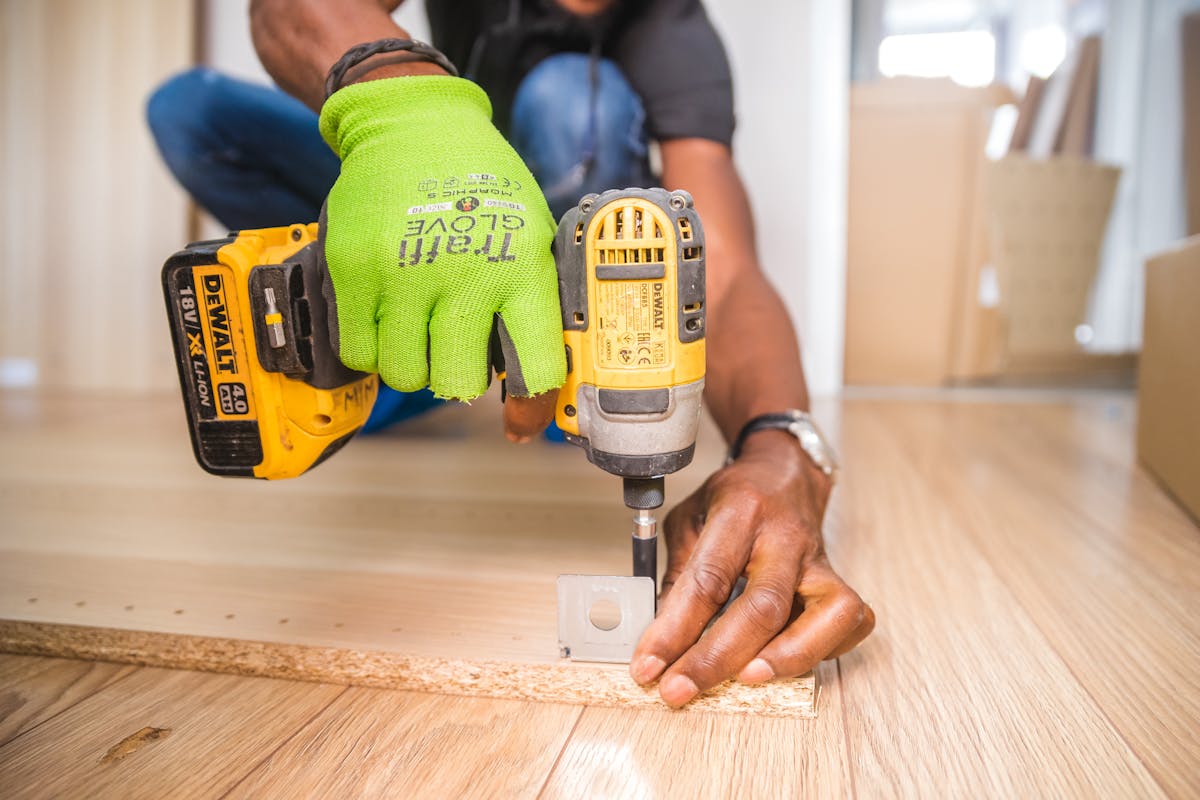
The insight behind PowerPass is that trade customers do not want rewards points. They want time back. A carpenter running three jobs at once does not need a loyalty voucher. He needs to get in, find the right timber, pay, and leave in under 15 minutes. PowerPass is built around that reality.
As one PowerPass member, Thomas Taylor of Thomas Taylor Carpentry, explains: "I can send one of my guys into Bunnings and, when I'm back in the office later on, I'm able to track expenditure on that particular job. That's such a big help when you've got a lot of different projects going on."
That utility is hard to replicate with a higher points earn rate. Once a tradie's history, job lists, and invoicing live inside PowerPass, switching to Mitre 10 means starting from scratch. The program creates lock-in through usefulness, not incentives.
How Community Loyalty Works
For everyday shoppers, Bunnings does not run a formal points program. What it runs instead is harder to copy and, arguably, more powerful.
The sausage sizzle
For more than 25 years, Bunnings has hosted community fundraising barbecues at the entrance of its stores every weekend. Local not-for-profit groups, scout troops, netball clubs, schools, rural fire services, book a slot and sell sausages in bread for $3.50 each. Bunnings provides the space. The community group keeps the proceeds.
It sounds simple. The scale is anything but. From 2014 to 2018 alone, more than 160,000 sausage sizzles were held across 237 Bunnings stores, raising over $144 million for community groups. In FY25, Bunnings supported over 77,000 community activities and helped raise and contribute more than AUD $67 million for community groups across Australia and New Zealand.
The sausage sizzle does something no discount program can replicate. It makes customers feel that shopping at Bunnings is a contribution to their community. The $3.50 they spend on a snag is not a marketing cost to Bunnings. It is direct funding for the scout troop next door. That association is genuinely positive, and it happens every single weekend, at every single store.
Free DIY workshops
Bunnings runs free workshops for adults and children in-store every weekend. Sessions cover tiling, decking, painting, plumbing basics, gardening, and basic woodwork. Children's workshops teach kids how to build a small project, a letterbox, a planter box, a simple toy, under supervision.
These workshops do two things at once. They reduce the anxiety of DIY projects, which increases the chance customers attempt them and buy the materials. And they create a ritual: families who come in for a Saturday workshop are in the store, browsing, buying. The workshop is the hook. The hardware sale follows naturally.
Local sponsorships and the Bluey effect
Bunnings funds local sports clubs, schools, and charities. In early 2024, it went further, temporarily rebranding six stores as "Hammerbarn," the fictional hardware shop from the Australian children's series Bluey. The campaign required no product change, no price change, and no loyalty mechanic. It generated enormous social media coverage and deepened the brand's connection with Australian families.
None of this is accidental. Bunnings has held the title of Australia's most trusted brand and it is built one sausage sizzle and one free tiling class at a time.
The Two-Track Loyalty Model
Bunnings' approach is the Two-Track Loyalty Model: one program for each of its two core customer types, built around what each group actually values.
Track 1: Professional retention (PowerPass) Trade customers value time, convenience, and reliability. PowerPass earns their loyalty by removing every possible source of friction, queues, lost receipts, manual invoicing, stock uncertainty. The program creates structural stickiness through utility. Switching has a real cost.
Track 2: Community retention (everyday shoppers) Consumer customers value experience, trust, and belonging. Bunnings earns their loyalty by investing in community events, free education, and local causes that make the store feel like a neighbourhood institution rather than a chain. The program creates emotional stickiness through goodwill. Leaving feels like losing something.
Most businesses try to serve both customer types with one program. Bunnings treats them as different problems and solves them separately. The result: #1 ranked loyalty program in Australia. And only one of its two tracks looks anything like a traditional loyalty program.
The Numbers Behind Bunnings' Dominance
The scale behind these programs is worth understanding.
Bunnings reported almost AUD $19 billion in revenue in FY2024, up from $14.99 billion in FY2020. It holds approximately 68% of Australia's DIY market, more than two-thirds of the entire category. Its closest rival, Mitre 10's parent Metcash, operates in a completely different revenue tier.
The home improvement market Bunnings dominates was valued at AUD $25.52 billion in 2025. It is projected to reach AUD $51.15 billion by 2035. As the market grows, Bunnings' loyalty lead compounds.
The community investment is substantial too. In a single financial year, Bunnings supported over 77,000 community activities. That is roughly 1,500 community events per week across its 382 stores, an average of four per store per week, every week of the year.
These are not marketing budgets. They are relationship budgets. And the return on them shows up in the Honeycomb Strategy data: PowerPass ranked #1 in Australia for customer engagement and impact on spending. No paid program came close.
5 Tactics small Businesses can Steal from Bunnings
You do not need 382 stores or a national brand to run these strategies. Here is what translates directly to independent businesses.
1. Build your program around your customer's job, not your need for data
PowerPass was not designed to collect customer data. It was designed to make tradies' jobs easier. The data retention is a side effect of the utility, not the goal.
Most small business loyalty programs are built backwards. They collect emails and phone numbers and purchase data, and offer a small discount in exchange. The customer tolerates this because the discount is marginally useful. They do not love the program. They just use it.
How to apply it: Ask one question before designing your program: "What is the biggest source of friction in the way my best customers buy from me?" Then build your program to fix it. A café whose regulars hate the morning queue could offer pre-order for loyalty members. A trade supplier could offer digital invoices and purchase history. A boutique could offer reserved access to new stock before it hits the floor. When the program solves a real problem, members use it because it helps them, not because of the discount.
2. Host a community event at your location
The Bunnings sausage sizzle is not a marketing stunt. It is a genuine community infrastructure investment that happens to drive foot traffic, dwell time, and goodwill at zero net cost to Bunnings.
Any local business can create a version of this. A hardware store can host a local school's fundraising day. A gym can offer its space to a community running club on Sunday mornings. A café can run a monthly local art display and opening night. A bookshop can host a neighbourhood quiz night. None of these require a budget. They require a space, a time slot, and a willingness to share it.
How to apply it: Choose one recurring event slot, a Saturday morning, a monthly evening, and offer your space to a local community group. Make it regular. Regularity is what makes the Bunnings sausage sizzle work. Customers learn to expect it. The expectation becomes part of the store visit. Over time, your store becomes part of the community's rhythm rather than just a place to spend money.
3. Teach your customers something useful
Bunnings' free DIY workshops are not a loyalty mechanic. They are an anxiety reducer. Most people who want to tile their bathroom do not because they are not sure they can. A free 45-minute workshop removes that hesitation. They go home, buy the tiles, and come back for the grout.
For any business that sells products customers need to learn to use, education is a retention tool. The customer who knows how to use what they bought returns when they need more. The one who struggles does not.
How to apply it: Run one free class, demo, or workshop per month tied to a product you sell. A beauty retailer could run a skincare routine class. A food retailer could run a cooking demo. A plant nursery could run a seasonal gardening workshop. Keep it free, practical, and in your store. The session builds confidence. Confidence drives purchase. And the habit of visiting becomes part of the customer's routine.
4. Separate your professional customers from your casual ones
Bunnings runs PowerPass specifically for trade customers because it knows their needs are structurally different from a weekend DIYer's. A builder who visits three times a week needs different things from a homeowner who visits three times a year. Treating them the same means serving neither well.
Most small businesses have a version of this split. There are occasional customers and there are regulars. There are casual buyers and there are professionals who use the business as part of how they work. These groups have different motivations, different visit frequencies, and different pain points.
How to apply it: Find your top 10–20% of customers by visit frequency or spend. Ask: "What do they need that my standard experience does not provide?" Then build a lightweight tier that solves exactly that. It does not need to be complex. A dedicated line for fast reorder. A tab they settle monthly. Early access to new stock. Reserved parking. A digital receipt for their tax records. Small things that say "we built this for people like you" are worth more than broad discounts spread across every customer.
5. Make loyalty feel like contributing, not just accumulating
The sausage sizzle succeeds because customers feel they are contributing to something, local sport clubs, schools, community causes, just by showing up and buying a sausage. The $3.50 is not a transaction. It is a small act of community participation.
This is the same mechanic The Body Shop uses with its charity donation option in Love Your Body Club. It is the same mechanic Patagonia uses when it directs a portion of sales to environmental causes. The pattern is clear. When a loyalty program lets customers feel their spending supports something bigger than a discount, the emotional bond is stronger.
How to apply it: Add one contribution mechanic to your program. It might be that a portion of every loyalty reward can be donated to a named local cause. It might be that purchases on a specific day contribute to a community fund. It does not need to be large in dollar terms. It needs to be genuine, specific, and visible. "Every time you redeem a reward, $1 goes to [local charity]" is more memorable than "earn 10% back on every purchase." One is a transaction. The other is a relationship.
How to build your own Program
What a local hardware or trade supply shop can steal directly: The PowerPass model maps almost exactly to any independent trade supplier or specialist hardware shop. If you serve builders, electricians, landscapers, or other tradespeople as repeat customers, the PowerPass blueprint applies without modification: give trade customers a separate account, log their purchases digitally, and give them a way to check stock or reorder without waiting at a counter. The point is not a loyalty card, it is removing every reason for a tradie to go elsewhere. Start with digital receipts and a standing account. Add the rest over time.
Bunnings invested decades building PowerPass and a community infrastructure across 382 stores. The principles behind it, remove friction, build community, make loyalty feel like contribution, are available to any business at any scale.
LoyaltyPass helps independent businesses put these principles into practice fast. A digital pass in Apple Wallet or Google Wallet handles the mechanics: points, stamps, rewards, digital receipts, and win-back messages. Your team stays focused on the human work.
Most businesses are live within a single shift. The QR code at the counter is all the infrastructure you need to start.
Why Bunnings Wins on Loyalty
Bunnings proves that the best loyalty programs are not the ones with the most generous earn rates. They are the ones most tightly matched to what customers actually value.
Tradies value time and reliability. PowerPass gives them both. Everyday shoppers value trust and belonging. The sausage sizzle and the DIY workshops give them both.
Two tracks. Two entirely different loyalty languages. One brand that ranks #1 in Australia across all of them.
The question worth asking for your own business: which track do your best customers actually need?